Radical Dreams
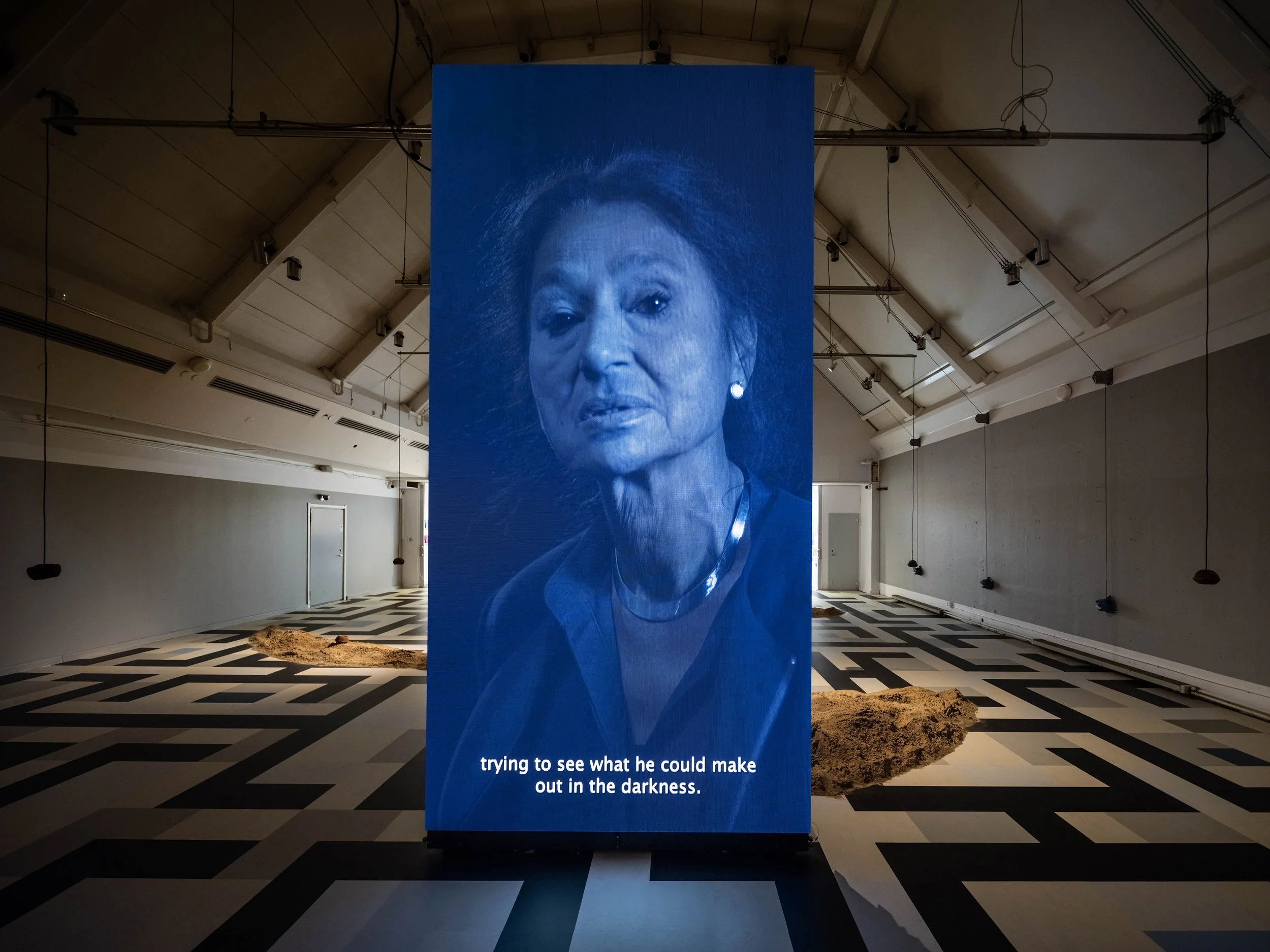
Image: Santiago Mostyn, Dream One, Södertälje Konsthall. Photo: Jean-Baptiste Béranger. Primary is working with Mostyn to present his first UK solo project and exhibition, beginning with the launch of a digital commission, Natural History (Radio Free Grenada), in March 2026. The commission will make available an intimate archive of speeches, songs, and music from the Grenada Revolution (1979–1983).
March – June 2026
Radical Dreams is an invitation by curator Jade Foster.
Coloniality continues to shape and test intersectional lives worldwide. Racism and anti-migrant sentiment remain widespread, while natural disasters—exacerbated by human pollutants, fossil fuel extraction, and rising sea temperatures—are disproportionately impacting the Global South. Climate change is not a distant threat; it is already being felt through increasingly frequent and extreme weather events, including heatwaves, floods, and wildfires.
Communities, families, and ancestral lands are bearing the consequences of environmental racism. In St. Elizabeth, Jamaica, for example, people are being displaced as the country faces severe challenges in the aftermath of Hurricane Melissa. In its immediate impact, approximately 70% of the island’s electricity supply was disrupted, alongside critical shortages of clean water, shelter, and food in affected areas.
Coloniality continues to create a deadly fog, perpetuating perplexity through misdirection, climate denial (as seen during Donald Trump’s administration in America and President Javier Milei’s administration in Argentina, with global industries following suit), and the prioritisation of wealth. The fog tests our commitment to life, community building, restoration, and intellectual sovereignty—what the Yoruba Cuban José Antonio Aponte, who revolted against the Spanish colonial government in the 18th century, might describe as our ‘sagacity’.
Radical Dreams is a small moment to bring together a transnational alliance that refuses to sustain the fog and its effects of death, social death and injustice. Together, we will focus on what it means to sustain life within a radically different future. The live programme of artistic research, such as writing, talks, performances, film screenings, workshops and other types of events, will explore a radical approach to sustainability and ecological transformation that goes beyond net zero carbon targets, the current priority by many governments, to envision what non-human and human life could be like when unburdened by the wickedness of intentional structural and planetary harm.
Participating organisations, collectives, and networks:
Archivo Familiar del Río Colorado, Mexicali, Baja California, México
Carriacou Museum and Carriacou Historical Society, Carriacou, Grenada
E-WERK Luckenwalde, Luckenwalde, Germany
Fresh Milk, St. George, Barbados
Hedge Herbs, London, UK
The Newbridge Project, Newcastle, UK
Primary, Nottingham, UK
Radar, Loughborough, UK
Teesside University (in partnership with MIMA – Middlesbrough Institute of Modern Art), Tees Valley, UK
Across these contexts, and more, as further partners join and the programme develops, we hope to consolidate research and draw transnational attention to how the work we do collectively across the world is connected, not disparate despite geographical boundaries, helping us and our sectors reflect on:
What makes an arts ecology an ‘ecology’?
Message from a Non-Speaking Curator
Jade Foster
For a long time, leadership has been confused with fluency: the ability to speak quickly, confidently, without interruption. Disability justice disrupted that assumption by reminding us that voice is relational, shaped by power, and sustained through interdependence.
But we may be entering another shift.
When speech itself becomes unstable—when communication is mediated, fluctuating, or non-speaking—leadership can no longer be measured by who speaks best.
The role of voice in leadership is not to dominate the room.
It is to redesign the room so that multiple forms of communication can exist without hierarchy.
If a third wave is emerging here, it may be this:
Not simply demanding access to power, but redesigning the conditions through which power recognises voice.
Note on Language
I am a non-speaking curator living with Functional Neurological Disorder (FND). I sometimes also use the term non-verbal, as it is more widely recognised, but I prefer non-speaking because I continue to communicate in many ways—through writing, mediated communication, and collaboration.
Within the context of Radical Dreams, this distinction matters. The programme asks how we might redesign the conditions through which voice is recognised, and how different forms of communication can exist without hierarchy. Using the term non-speaking acknowledges that voice does not exist only through speech and that communication can take multiple forms.
Image Description
A large gallery space with high ceilings and exposed lighting fixtures is shown from a central viewpoint. In the middle of the room stands a tall, narrow vertical screen displaying a blue-toned video portrait of a woman speaking. Her face fills most of the screen, softly illuminated in deep shades of blue. Near the bottom of the image, white subtitle text reads: ‘trying to see what he could make out in the darkness.’
The screen rises from the floor like a freestanding column, dividing the space visually. Around it, the gallery floor is marked by a bold black-and-white geometric pattern that stretches across the room. Several small mounds of earth are placed directly on the floor nearby, forming low sculptural shapes within the patterned surface.
The surrounding walls are pale and mostly empty, with visible doors and suspended cables or lighting equipment hanging from the ceiling. The space feels quiet and open, with the vertical screen serving as the installation’s central focus.