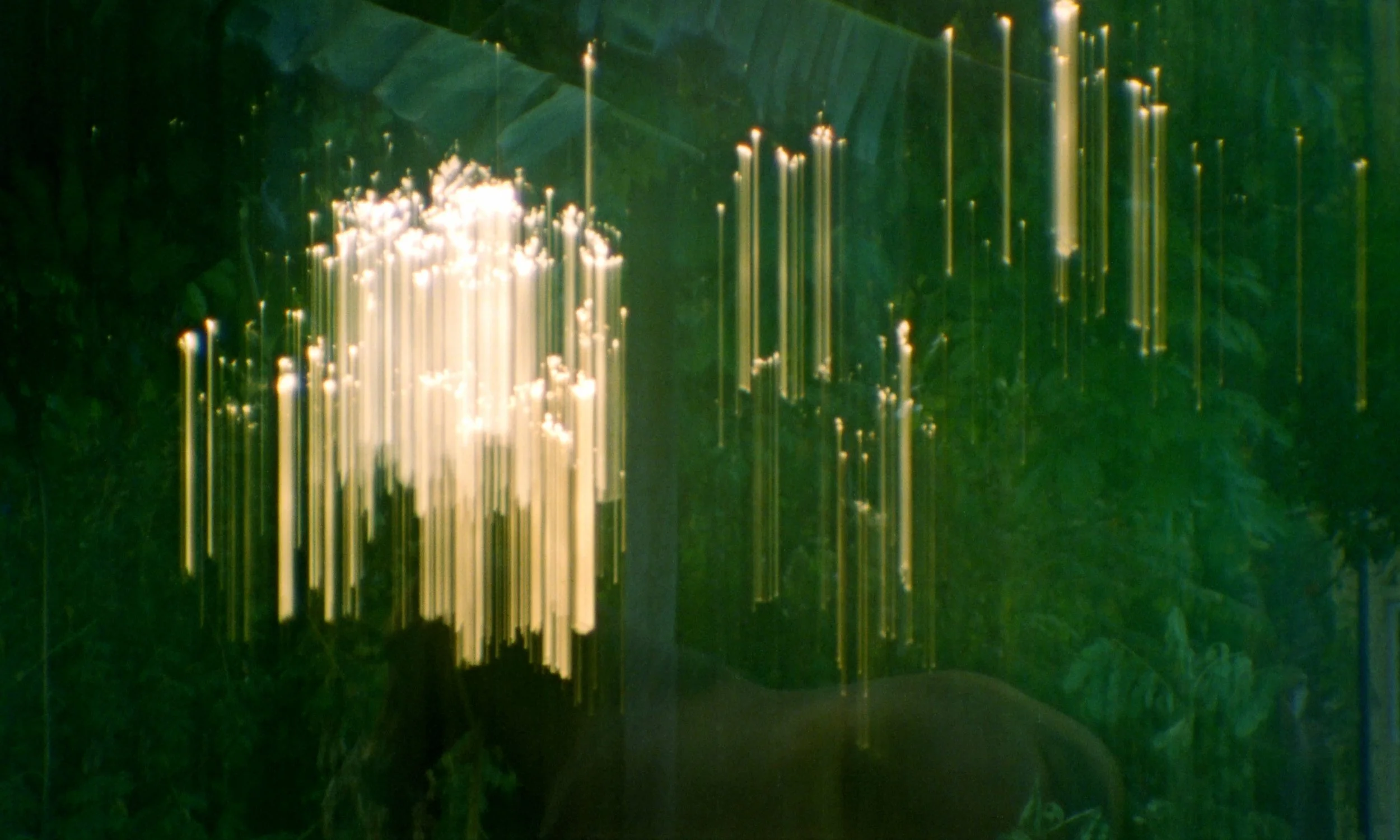
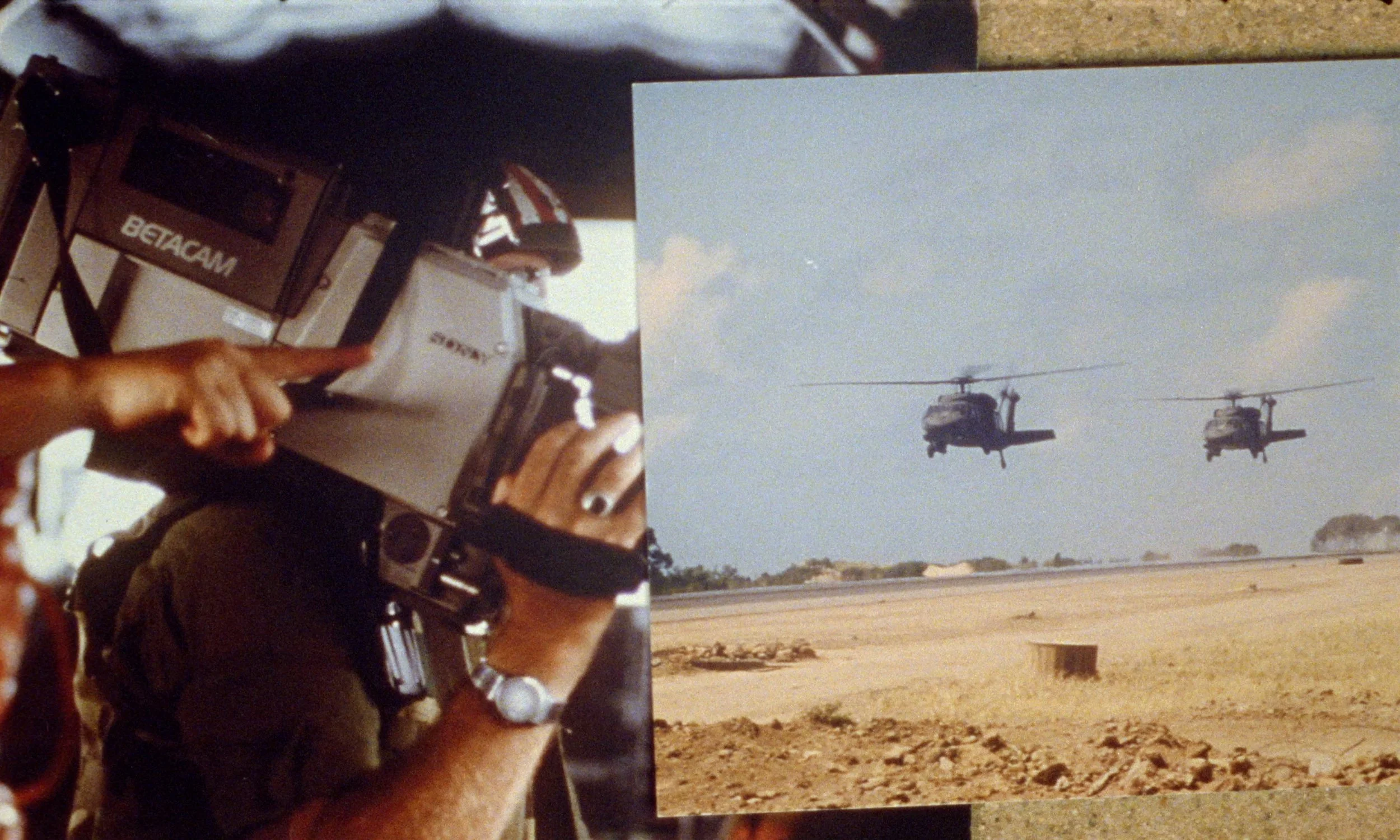
Natural History is the culmination of an extended period of visual and auditory research by Stockholm-based artist Santiago Mostyn into the Grenada Revolution (1979-1983). Photographic archives, personal correspondence, audio recordings, textiles and 16mm film are presented and remixed in the galleries to create an open-ended retelling of one of the most consequential yet overlooked episodes of the Black Power era in the Caribbean.
Natural History
On 13 March 1979, the New Jewel Movement carried out a popular coup on the island of Grenada. Under Prime Minister Maurice Bishop, the People's Revolutionary Government set about transforming the small, majority-Black nation of 100,000 people into a radically egalitarian social democracy.
By October 1983, internal divisions and external destabilisation efforts led to Bishop's execution alongside the influential Minister of Education Jackie Creft and six other central committee members. Days later, the US military invaded Grenada, and the bodies of the leaders were never found. Mostyn lived through the invasion as a child, and the collapse left, in the words of George Lamming, “a wound in the conscience of the hemisphere that is yet to heal.”
Psychologists commonly describe trauma not as a shocking visual memory but as a void—an event so fragmented and unassimilated that memory fails and autobiographical continuity falls apart. Natural History approaches the void obliquely, with Mostyn navigating a pathway back to that absence by inhabiting the craft techniques of his parents – his mother’s textile practice and his father’s work in music and radio – before reckoning with the protagonist of this history on film.
Central to the exhibition is a 16mm film portrait of Bernard Coard, co-leader of Revolutionary Grenada, who is often held responsible in colloquial discourse for the split that resulted in Bishop’s death. After twenty-six years in prison, Coard now lives alone in Jamaica, where he is filmed moving through his daily routines of writing, swimming, and reading, before falling asleep and waking, in an altered state, in the middle of the jungle.
Coard is a figure of profound historical ambivalence: the intellectual architect of the Revolution, a childhood friend of Maurice Bishop, and since his release a writer, lecturer, and consultant on projects including Steve McQueen’s Small Axe series. Reflecting on the work, Mostyn explains that the film’s key axis is “human folly and how it collapses back into, or is eventually forgotten by, nature.”
Natural History constitutes a reckoning with personal history, with the knowledge carried in craft, and with the kinds of memory that resist being metabolised into official narrative.
This exhibition was developed in close collaboration with curator Jade Foster.
Santiago Mostyn (b. Turtle Island) is an artist working with film, installation and performance. His practice reflects on cultural exchange and interconnectedness across African diasporic communities. Recent solo exhibitions include Skånes Konstförening, Malmö; Mariakirken, Copenhagen; and Gerðarsafn Museum, Iceland. Recent group exhibitions include Kochi-Muziris Biennale; Stellenbosch Triennale; the National Gallery of Zimbabwe, Harare; Sequences XII, Reykjavik, and Blindspot Gallery, Hong Kong (all 2025). He was a resident at Akademie Schloss Solitude in 2022, and held the 2024–25 David and Roberta Logie Fellowship at the Harvard Radcliffe Institute.
In collaboration with Susanna Marcus Jablonski, Mostyn is currently realising Master Narratives, Malmö's official anti-racist monument, to be permanently installed in October, 2026. The project began as a citizens’ initiative in 2019 by local activists to honour victims of a white supremacist serial killer who was active in Malmö between 2003 and 2010.
On October 24th, Mostyn will collaborate with Dr Jacob Fairless Nicholson and the Black Cultural Archives on a display and activation of archival material from the Jackie Creft Memorial Collection in Primary’s Reading Room.
Access: Natural History takes place across two gallery spaces at Primary, with level access to Gallery 1 and the reading room. There is stepped access to Gallery 2. You can find further access information on our website’s Visit Us page and via AccessAble.
Please email admin@weareprimary.org with any access inquiries.